
 By Sarah Macklin
Designing an effective home workspace requires more than simply placing a desk and chair in a spare room.
A well-thought-out home office is the result of careful planning, appropriate furnishings, and an atmosphere that actively supports focus and well-being.
With remote and hybrid working now a permanent fixture for many households across the UK, carving out a dedicated area for productivity is no longer a luxury but a necessity.
At Speaking of Housing, we have put together this guide to help you create a workspace that combines efficiency, comfort, and style.
Maintain cleanliness and order
A tidy environment supports a tidy mind.
Clutter is one of the biggest barriers to productivity, and studies consistently show that disorganised surroundings can increase stress and reduce focus. By investing just a few minutes at the end of each working day to clear your desk, you set yourself up for a smoother start the following morning.
Consider incorporating smart storage solutions, such as floating shelves or under-desk drawers, to keep paperwork neatly tucked away. Desk organisers are also invaluable for ensuring pens, chargers, and other small items don’t migrate across your workspace.
Regular cleaning — not just dusting but also disinfecting keyboards, mice, and touchscreens — helps to maintain a professional and welcoming atmosphere.
Incorporate feng shui principles
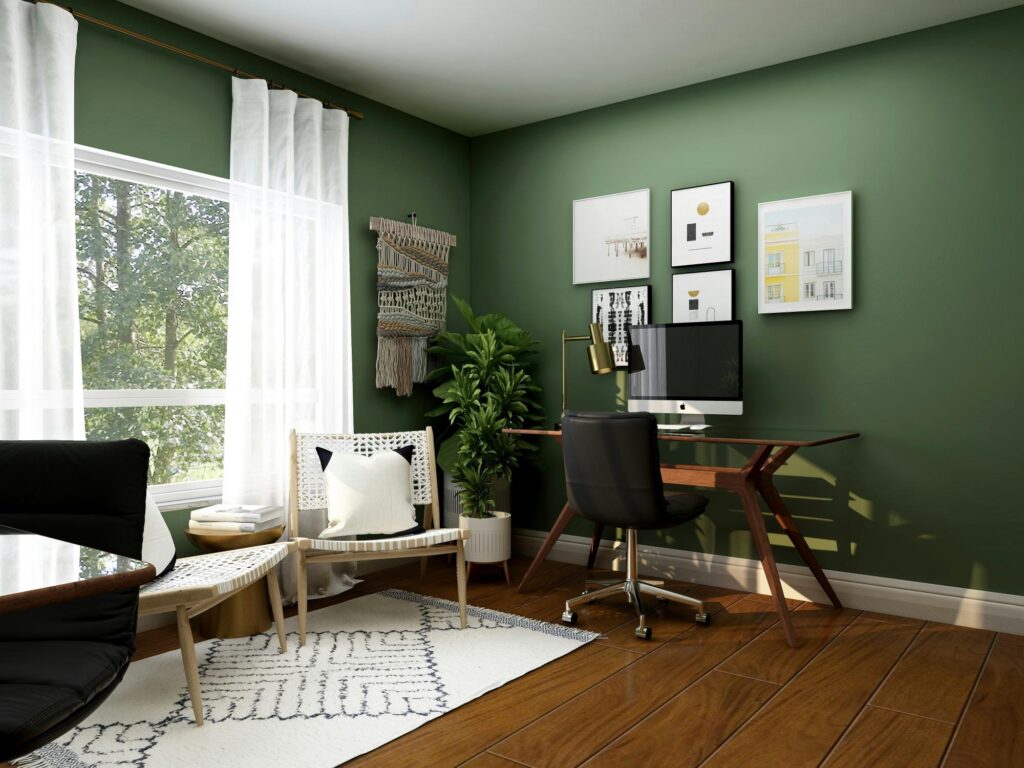
If you’re keen to maximise both functionality and atmosphere, feng shui offers a holistic approach. The position of your desk is particularly important: placing it in the “command position” (facing the door but not directly in line with it) symbolises control, security, and openness to opportunity.
Natural elements can also play a powerful role. Adding a plant not only invites positive energy but improves air quality, an underrated factor in maintaining focus during long hours indoors.
A small water feature, meanwhile, is thought to promote calm and steady energy. Colour is another key consideration: cool blues and greens help create a tranquil environment, while accents of warm tones like terracotta or soft gold can add balance.
Illuminate the space properly
Lighting is often overlooked, yet it is one of the most critical elements of a productive home office.
Natural light not only reduces reliance on electricity but has also been linked to improved mood and reduced fatigue. Positioning your desk close to a window can dramatically boost concentration levels, but do consider glare and screen reflections. Sheer blinds or adjustable shutters may help.
When natural light is limited, a layered lighting scheme works best. Ambient lighting (such as ceiling fixtures) provides overall brightness, while task lighting from adjustable desk lamps allows you to direct illumination exactly where you need it.
Accent lighting, such as wall sconces or floor lamps, adds warmth and depth, preventing your office from feeling clinical. Together, these layers create a balanced environment that feels inviting and practical at all times of day.
Choose the right office equipment and furniture
When enhancing your office, it’s tempting to focus on aesthetics, but practicality should always come first. Ergonomic furniture remains the cornerstone of a comfortable workspace.
An adjustable chair that supports your spine, paired with a sit-stand desk, encourages movement throughout the day and helps reduce the health risks associated with prolonged sitting.
Beyond furniture, think about your tools. Noise-cancelling headphones can be invaluable if your home is busy, while a second monitor is a worthwhile upgrade for anyone who multitasks or manages complex projects. Small details also make a difference: a quality desk mat, a wireless keyboard, or even a footrest can transform your comfort levels.
Set up an ergonomic workspace
An ergonomically designed workstation ensures that your home office supports your health as well as your productivity. Ideally, your monitor should sit at eye level to avoid neck strain, while your chair should allow your feet to rest flat on the floor. Keeping your arms bent at a natural right angle while typing helps to reduce the risk of repetitive strain injuries.
It is also worth building movement into your routine. Even the best ergonomic setup cannot fully protect against the effects of sitting for long stretches. Taking short breaks to stand, stretch, or walk around not only boosts circulation but refreshes mental focus, something that a carefully designed workspace should always encourage.
Manage cables and wiring
Cables may seem like a minor detail, but they can quickly create visual clutter and even pose safety hazards. Good cable management immediately elevates the look of a home office, giving it a sleek, professional finish.
Practical solutions include under-desk trays, cable sleeves, and adhesive clips that keep wires tucked neatly out of sight. Wireless charging stations and Bluetooth accessories can also dramatically reduce the number of cables required. If you’re setting up a permanent office, plan ahead by installing floor boxes or wall-mounted sockets to ensure a streamlined result.
Keep technology up to date
Technology is the backbone of modern working life, and outdated equipment can become a significant source of frustration. Slow computers, unreliable internet, or outdated software not only waste time but create unnecessary stress.
At a minimum, invest in a stable high-speed internet connection and ensure your hardware can handle the demands of your workload. For those working with large files, additional storage or cloud-based solutions are worthwhile investments.
Software should also be reviewed regularly. Many productivity apps now integrate across devices, making it easier to stay organised and on top of deadlines. Ultimately, efficient technology not only saves time but allows you to work with confidence.
