
 By Sarah Macklin
Buying a home is going to be one of the biggest purchases of your life – so you don’t want to mess it up, which is something many first-time buyers actually fear.
But it’s not as easy as finding a home and moving in. There are lots of decisions to be made, and how exactly do you know when you’ve found the perfect home, ‘the one’, your forever home?
In this guide, we run through all the major things you need to think about and do when buying a property to help you on your way, including picking a location and budget, where to look for properties, how to look for properties most effectively, deciding which homes to view and finally how you know you’ve found ‘it’.
Contents
Use the links below to jump to a specific part of this guide.
- Deciding on a location and budget
- Where to look
- How to look
- Deciding which properties to view
- How to know when you’ve found the perfect home
Deciding your location and budget
Tip #1: Pick a location
Shopping for houses can feel like a minefield, particularly if you haven’t narrowed down your search enough. Sometimes, searching huge radiuses can only leave you baffled by the amount of choice there is, resulting in confusion. Once you’ve purchased a home, you can’t move its location, so it’s best to get this decision right now.
Spend a bit of time thinking about the areas you want to purchase in. This doesn’t have to just be one place – it can be multiple towns, villages or cities.
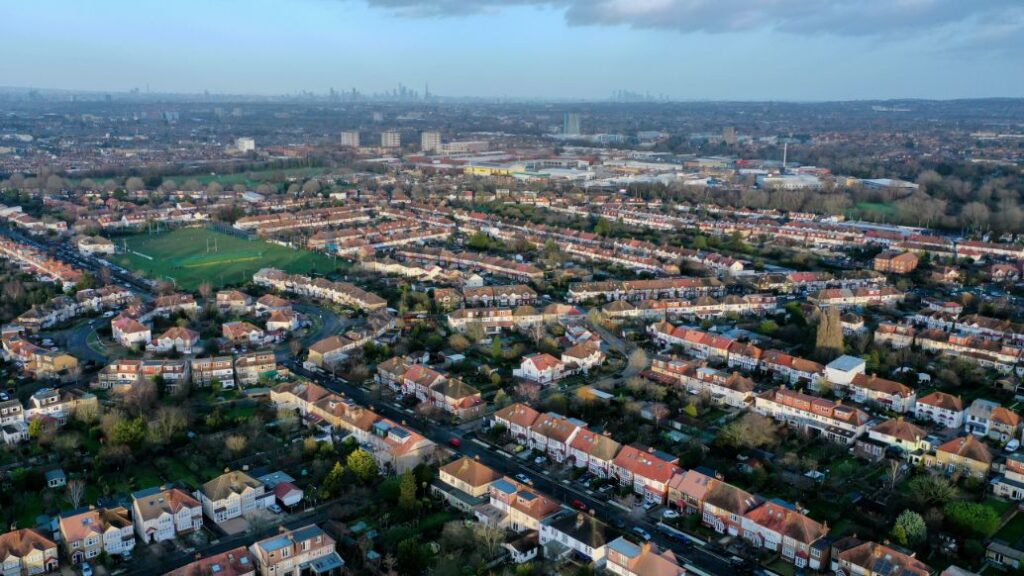
But the key is, when you’re trying to find the perfect home, set your radius. For instance, don’t search up to 20 miles outside Manchester as this is a huge search area. Instead, you could set your radius for up to two miles outside Cheadle, a small village located within Greater Manchester.
This specificity will go a long way in your search.
When actually trying to narrow down a location, consider areas that are:
- Close to where you work
- Near to family
- In close proximity to good schools (if you have children)
- Near to shops and other amenities or facilities
- Next to green spaces
- Where you want to live
Tip #2: Set your budget
Budget is really important when buying a house. You don’t want to go too far over, but you also may not want to go too far under, as you won’t be buying the maximum house for your money.
To find out what house you can afford, you should first get your own property valued (if you have one you want to sell). This will give you an idea of how much equity is in the property, equity that will be released to you once you sell. Then, you should set up a meeting with a lender, like a bank, to see how much they will be willing to lend you based on your current financial situation (outgoings, wage, savings, etc.).
Once you have a figure for how much the bank will lend you and how much you could get from selling your own property, you will know the maximum amount you can afford.
Where to look for your perfect home
You’ve ticked off the basics and got your location and budget covered. But how do you find the houses that are currently on the market that you might want to view?
Tip #3: Use property-finding sites
These days, it’s easiest to shop for properties online and there are a whole host of property-finding sites that can help you.
The main ones are:
- Rightmove – One of the biggest home search sites available, Rightmove shows you everything you need to know about the available homes. There’s a map so you can clearly see where the home is located, and it also gives you photos, floorplans, estate agent information, the ability to book a viewing and descriptions of the property.
- Zoopla – Zoopla is very similar to Rightmove, but it also gives you historic information about properties. This allows you to see exactly when they were last sold and for how much, so you know you’re not overpaying. Though do be wary that if the house was last sold in 2010, the price will have increased.
- OnTheMarket – This site is newer than Zoopla or Rightmove, but still dominates home search sites. It can sometimes have different listings to the others, too, so worth having a look for anything new.
Tip #4: Visit your local estate agents
Despite the internet being the number one place to search for properties, there are still estate agencies that operate both online and offline. You can either check their websites for new properties for sale, or you can go into an estate agents and ask them to help you with your search. You can provide them with a budget and location and they’ll find some great properties for you to look around.
You can also find properties on estate agents’ websites. Do your research and find the estate agents in your local area and frequently check their site for new properties.
Tip #5: Use Facebook Marketplace
It’s unusual, but there are sometimes houses for sale listed on Facebook Marketplace that you can request to view. It’s usually rental properties that are most often posted, but you can set up an alert for homes that are ready to buy.
How to look
Now that you know where to look for properties, how exactly can you use these platforms to narrow down your search?
Tip #6: Use filters
Filters are going to be your best friend when you’re looking for your next home online. Without them, you could be looking at homes that are out of your desired location, more than your budget and that have features you do/don’t want.
On all the home search sites we mentioned above, you have the ability to filter the properties you see. The first filter is by location, and the site will ask you to put in a town or city. It will also ask the radius you want to see, e.g. 5 miles, 10 miles, exact location only, etc. This means, should you enter ‘Chipping Norton’, you can see the homes only in this town or you can set the radius so you will also be shown homes up to a certain number of miles outside the town.
Next, you’ll be asked for a budget. You can usually give a minimum and maximum budget and you’ll be shown homes that fall between this bracket.
Other optional settings you can clarify include house type (detached, semi-detached, terrace, etc.), a minimum or maximum number of bedrooms, parking, garden, garage, new homes only, auction-only homes, and more. These things can be useful if you know you want a home with a garden but aren’t fussed about having private parking.
We absolutely encourage you to make the most of filters when trying to find your perfect home.
Tip #7: Set up alerts
Alerts are another feature that you should use to find a home to buy. You can set up alerts with local estate agents or with Rightmove or Zoopla. They look a little something like the below:

Every time a property comes onto the market that falls within your location and price bracket, you’ll receive an email with the option to view the ‘full property details’. This takes you through to the listing on the estate agent’s website, where you can arrange to view the property if it’s right for you.
Rightmove takes alerts one step further and allows you to draw the specific area you want alerts for.
Let’s say for example you’re looking for a property in York BUT you only want southern areas of York. You can draw your area and then select ‘View Properties’.

Once you’ve put in your budget, you’ll be shown the properties within that location.
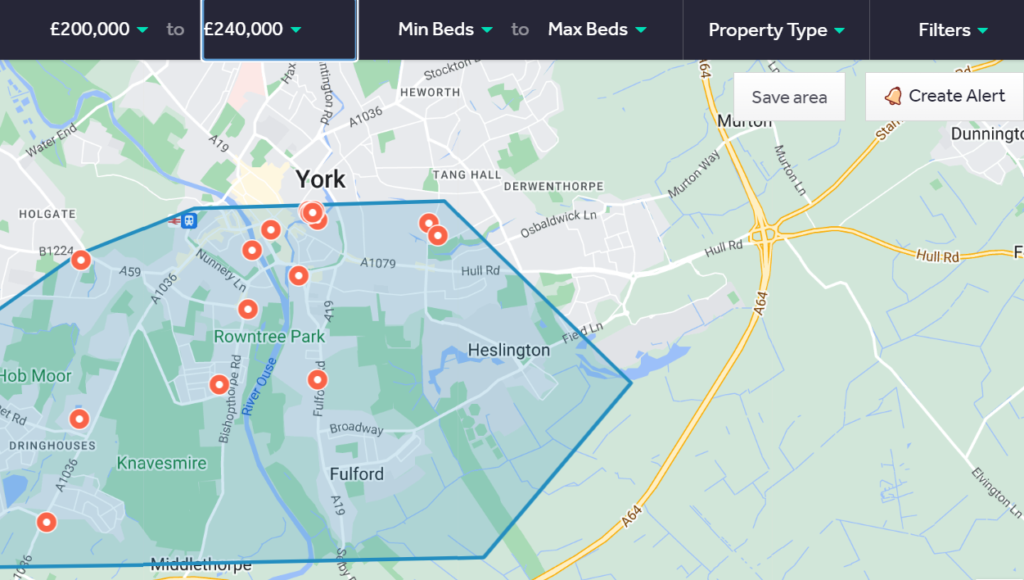
Next, you can create your alert and say how often you want to be contacted:
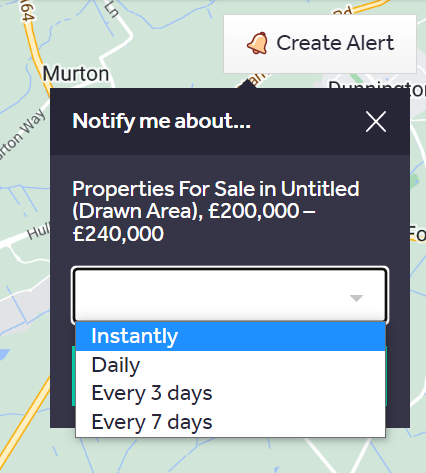
Once your alert is saved, you can start receiving email alerts with relevant properties for you, so you’re the first to know about them.
Deciding which properties to view
We’ve got you well on your way to finding your perfect home, but there’s still a lot to do. Once you’ve worked out how to view houses and how to set up alerts/filters, you need to decide which properties are worth viewing. Viewing too many can make them blur into one, and there’s no point in having a look around somewhere you’re very unlikely to buy. You can find our tips below that could help you to decide which homes are worth looking around and which are best to leave.
Tip #8: Read the description properly
The property description can tell you a lot about a building, and it’s important to do your research before you go to view a house.
You should try to find out whether the property is freehold or leasehold, the council tax band it sits in, whether there are additional maintenance/service fees to pay and if there’s anything weird and wonderful about it (shared garden, part ownership, listed building, etc).
You may not want to view a house that is listed as leasehold, so this one could get crossed off your list immediately.
Tip #9: Check the location
You should use Google Maps to see what is around the property, particularly to see if there is anything about it that might put you off. If, for example, you don’t want to live next to a school or busy road, it may not be worth viewing the building. Things to check for in the surrounding area include:
- Trainlines
- Very busy roads (A roads, motorways, etc.)
- Schools
- Pubs
- Shops/warehouses
- Building sites
You can use Google Maps to see whether there are any of these things nearby, but you can also use ‘street view’ to wander the streets virtually and see what the general area looks like.
Tip #10: Make your property checks
What if you found a house you love, but there are 20 new builds being created at the back of it? Or perhaps the neighbour is planning a large extension that could ruin the view from your back garden. Maybe the house is in a flood risk area.
Absolutely make checks like these before you view or buy a property.
The Government website can give you an idea of flood risk for homes in England, so do check there. For Scotland, use the Environment Protection Agency site, Wales the Natural Resources site and Northern Ireland, the NI Direct website.
You might also want to use the Gov planning decisions tool to see what planning developments are currently in place. This would show planning your neighbours have put in, as well as larger development sites.
Tip #11: Favourite the properties you like
When browsing Rightmove or Zoopla, you can save or favourite the properties you like the look of. Take a look at all the ones in your budget/area and only favourite the ones that are actually an option.
One property could be in the right price bracket but the slightly wrong location. Another could have the right number of bedrooms but a very small garden. These things cannot be changed should you purchase the property, and therefore we’d suggest not saving these ones.
The homes you should view are the ones you’re drawn to online that seem to tick most of the boxes. Remember, you may have to compromise somewhere when buying a house (this is normal and expected), but do view the ones that seem to be what you have in mind, in the right location and at the right price. These are the ones that should be added to a Favourites list.
Once you have a list of a few houses, you can go back through them and decide which you would like to view.
It’s a good idea to view the ones you don’t necessarily have a ‘feeling’ for. If you don’t like the look of them online, viewing them in person can make you change your mind completely.
How do you know when you’ve found ‘the one’?
Once you start looking around properties that you liked the look of online, how do you know which is the perfect one for you?
1. You get the ‘feeling’
Some people know when they’ve found the right house because they get a good feeling as soon as they step into it. It’s not always this easy for everyone but generally if you fall in love with a property immediately, it’s likely to be the one for you.
Don’t feel upset if you don’t get this feeling. Sometimes it can take a few days or may be a bit more subtle. For example, if you look around and then find yourself thinking about it constantly for the next few days or returning to its sales listing, then that could be your sign. Plus it’s not the only way of knowing whether a home is right for you.
2. You can see past its flaws
Not every home you look at is going to be to your taste or exactly as you would want it. Many properties will have flaws, things that you would change and perhaps even parts you would redo entirely.
You’ll know if a house is perfect for you, however, if you can see past these things and imagine what it could look like if it was yours.
Perhaps you’re walking round thinking you could move the furniture here or replace the flooring here. These things are a sign that you like what you see.
3. You can imagine yourself living there
If you can picture yourself living in the house you’re viewing, then it’s almost certainly the right one for you. So if you’re dreaming about reading a book in a corner of the living room or cooking dinner in the kitchen, then maybe book a second viewing.
4. You get excited about it
If you can’t wait to tell your friends and family all about this amazing house that you viewed, the chances are you’ve found ‘the one’.
5. Other homes seem insignificant
It’s likely that you aren’t just looking around one property, but multiple potential homes. If you’ve fallen in love with one, it can feel like every other home you view just doesn’t match up. Regularly comparing everything you see to a certain other house? Then that one is likely to be the house for you.
Well, we hope you’ve made it to the end of our mammoth guide, and that you’ve found the information useful to help you find your next perfect home.
